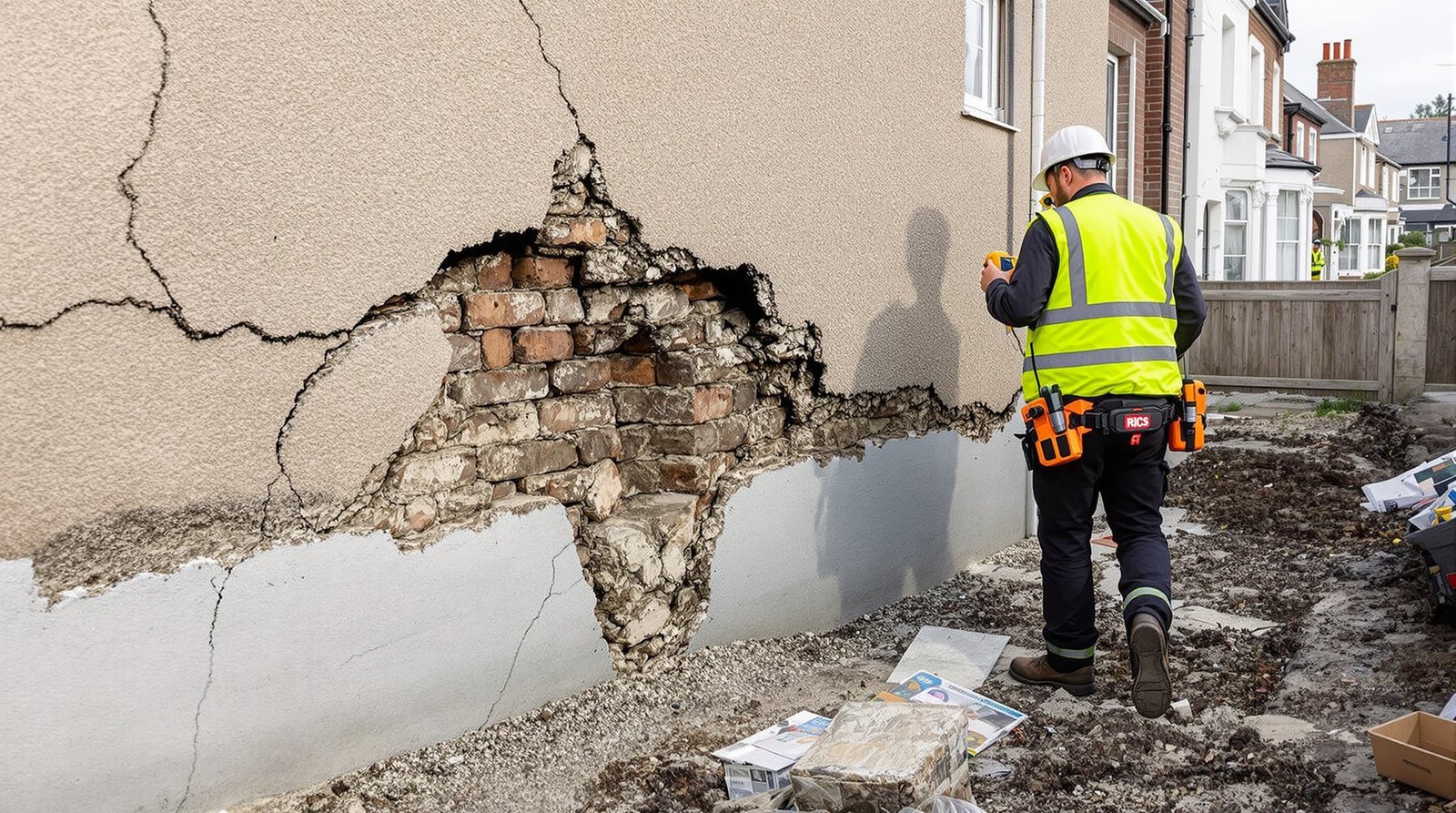
Subsidence represents one of the most serious concerns for Surrey property owners, particularly given the region's extensive clay soil composition. As RICS chartered surveyors who have investigated hundreds of subsidence cases across Chessington, Epsom, Kingston Upon Thames, and surrounding areas, we understand the critical importance of early detection, proper assessment, and effective prevention strategies. This comprehensive guide explains everything Surrey homeowners need to know about subsidence risks, causes, and protection measures.
Interactive Subsidence Risk Assessment
Assess your Surrey property's subsidence risk with our expert assessment tool:
What type of soil is your property built on?
Your Subsidence Risk Assessment
What is Subsidence and Why Surrey is Particularly Vulnerable
Subsidence occurs when the ground beneath a property's foundations moves downward, causing the building above to sink and potentially leading to structural damage. Surrey's geological composition makes it particularly susceptible to subsidence, with an estimated 75% of the county built on clay soil that expands and contracts significantly with moisture changes.
The shrinkable clay soils common across Surrey, particularly in areas like Chessington, Epsom, and Esher, can lose moisture during dry periods and expand dramatically during wet weather. This natural cycle, combined with tree root activity and aging infrastructure, creates the perfect conditions for subsidence-related property damage.
Surrey's Clay Soil Composition
Understanding Surrey's Geological Risk Map
High-Risk Areas:
- • Chessington: Extensive London Clay formations
- • Epsom: Gault Clay and London Clay mix
- • Esher: Thames Valley clay deposits
- • Claygate: Named for its clay-rich geology
- • Surbiton: River terrace clay formations
Clay Characteristics:
- • High plasticity index (movement potential)
- • Significant shrink-swell capacity
- • Poor drainage properties
- • Susceptible to tree root damage
- • Weather-dependent volume changes
Common Causes of Subsidence in Surrey Properties
Understanding the root causes of subsidence is essential for both prevention and early detection. Our surveying experience across Surrey has identified several primary factors that contribute to ground movement and foundation instability.
Recognizing the Warning Signs: Early Detection is Critical
Early detection of subsidence can mean the difference between manageable repairs and catastrophic structural damage. As experienced RICS surveyors, we've developed a comprehensive checklist of warning signs that Surrey property owners should monitor regularly.
Subsidence Warning Signs Checklist
Structural Signs
External Signs
When to Call a Professional Surveyor
Professional Assessment Triggers
Contact Chessington Surveyors immediately if you notice:
- • Any cracks wider than 3mm or growing cracks
- • Multiple warning signs from the checklist above
- • Structural changes after drought or flooding
- • Problems with doors, windows, or building alignment
- • Ground movement visible around your property
Early professional assessment can save thousands in potential repair costs and protect your property investment.
Prevention Strategies: Protecting Your Surrey Property
Prevention remains the most effective and cost-efficient approach to managing subsidence risk. Based on our extensive experience across Surrey's diverse property portfolio, we recommend a multi-layered prevention strategy that addresses the primary risk factors specific to our region.
Tree Management
-
Regular pruning: Reduce canopy size to limit water uptake, especially during dry periods
-
Strategic planting: New trees should be planted at least 1.5x their mature height from buildings
-
Species selection: Choose low water demand species like birch, rowan, or small fruit trees
-
Professional assessment: Annual tree health checks by qualified arborists
Water Management
-
Drainage maintenance: Annual gutter cleaning and drainage system inspection
-
Soakaway systems: Install proper surface water drainage away from foundations
-
Foundation watering: During dry periods, maintain consistent soil moisture around foundations
-
Leak detection: Regular checks for underground pipe leaks using water meter monitoring
Monitoring Systems
-
Crack monitoring: Photograph and measure any existing cracks monthly
-
Ground level checks: Annual measurements around property perimeter
-
Digital monitoring: Smart sensors for continuous ground movement detection
-
Weather awareness: Increase monitoring during extreme weather periods
Structural Measures
-
Foundation assessment: Professional evaluation of foundation depth and condition
-
Underpinning consideration: For properties with shallow foundations in high-risk areas
-
Root barriers: Install protective barriers between large trees and foundations
-
Load distribution: Ensure proper load distribution across foundation systems
Insurance, Legal, and Financial Considerations
Subsidence can have significant financial implications beyond repair costs. Understanding insurance coverage, legal responsibilities, and property value impacts is crucial for Surrey homeowners dealing with or seeking to prevent subsidence issues.
Insurance Coverage and Claims
| Insurance Aspect | Typical Coverage | Common Exclusions | Surrey Considerations |
|---|---|---|---|
| Subsidence Claims | Structural damage and repairs | First £1,000-£1,500 excess | High clay soil risk affects premiums |
| Tree Damage | Usually covered if sudden | Gradual damage over time | Surrey's mature trees increase risk |
| Monitoring Costs | 12-24 months professional monitoring | Self-monitoring not covered | Essential for clay soil properties |
| Alternative Accommodation | During major repair works | Luxury accommodations | Surrey rental costs are high |
Professional Survey Requirements
When Subsidence Surveys are Essential
Property Purchase:
- • Pre-1950s properties in clay soil areas
- • Properties with large trees within 20 meters
- • Any visible signs of ground movement
- • Properties with previous subsidence history
- • Insurance claims affecting the property
Ongoing Monitoring:
- • Annual checks for high-risk properties
- • After extreme weather events
- • Before and after tree work
- • When planning extensions or modifications
- • Following nearby construction activity
Treatment and Repair Options
When subsidence does occur, prompt and appropriate treatment is essential to prevent further damage and protect property values. Treatment approaches vary significantly depending on the underlying cause, severity of damage, and property characteristics.
Monitoring and Observation (60% of cases)
When Appropriate:
- • Minor, stable cracking
- • Recent tree removal (potential heave)
- • Seasonal movement patterns
- • New construction settlement
Monitoring Process:
- • 12-24 month professional monitoring
- • Monthly crack measurement
- • Seasonal pattern analysis
- • Digital monitoring systems
Cost: £1,500-3,000 for professional monitoring program
Tree Management Solutions (25% of cases)
Treatment Options:
- • Crown reduction (30-40% canopy removal)
- • Root barrier installation
- • Selective tree removal
- • Root pruning (where appropriate)
Considerations:
- • TPO (Tree Preservation Order) requirements
- • Conservation area restrictions
- • Neighbor consultation needs
- • Potential heave after removal
Cost: £2,000-8,000 depending on tree size and legal requirements
Underpinning and Structural Repair (15% of cases)
Underpinning Methods:
- • Mass concrete underpinning
- • Mini-pile systems
- • Beam and base underpinning
- • Resin injection systems
When Required:
- • Continuing active movement
- • Structural integrity concerns
- • Shallow foundation properties
- • Severe differential settlement
Cost: £15,000-50,000+ depending on property size and method
Expert Subsidence Protection Plan
Protect your Surrey property investment with our comprehensive subsidence prevention and monitoring services
Risk Assessment
Professional evaluation
Monitoring Systems
Ongoing protection
Prevention Plans
Customized strategies